Research day 2022

SRMIST celebrated "Research Day" on Feb 28, the National Science day.

Eminent Faculty

With PhD and Post-doctoral experience abroad

Eminent Faculty

With PhD and Post-doctoral experience abroad

Semester Abroad Program

More than 100 students have gone to World's Best Universities

Indian Genetics Congress, March 2015

Inaugurated by Noble Laureate Harald zur hassan and Prof. M. S. Swaminathan - A Milestone Event

Dynamics of Biotechnology

SRM IST, Department of Genetic Engineering, Faculty members and students attend the International Conference on "Dynamics of Biotechnology" at Stella Mary's College, Chennai

Research Day 2022

Research day celebrations

Student counseling cell

The Department of Genetic Engineering Launches "Student Counseling Cell"

Showing posts with label Student activities. Show all posts

SAP @ Brigham and Women’s Hospital, Harvard Medical School

Being a scholarship student in the department of Genetic Engineering, I was selected among the 10 other students to do our final year bachelor thesis at Brigham and Women’s Hospital, Harvard Medical School. We had to start the internship in short notice, but with the support of members of international office, our head of the department and faculties we could complete our 7th semester course before going and also other formalities such as visa interview easily.

After reaching Boston, USA, first few days pass by in settling according to USA customs. I was overwhelmed after visiting the Harvard campus and MIT campus on the first day itself. I met Dr. Anna Krichevsky and Dr. Nadiya Teplyuk officially on my orientation day where they welcomed me warmly and introduced me to different people in the lab. I was very excited to start my work and work with people from so many different countries.

In my initial days, Dr. Anna gave me some research articles to read so that I can a better understanding about the projects going in the lab. We then used to discuss my questions over lunch and during lab meetings. All people in the lab respected the fact that I wish to learn and always addressed my questions respectfully. This gave me confidence and helped me to maintain interest in the subject. I also observed the different experiments performed by different scientists in the lab and helped them sometimes.

With Dr. Anna Krichevsky, Dr. Nadiya Tepluk 
After a week or two, Dr. Anna Krichevsky suggested me to work under Dr. Nadiya Tepluk who was working in trying to find “The role of miR10b action in glioblastoma”. Dr. Nadiya, apart from an experienced researcher was a very good teacher. She patiently taught me all the basic experiments in the first few weeks. The experiments include Cell culturing, RNA analysis by real time PCR and protein analysis by Western blotting, some assays etc. After few weeks, Dr. Nadiya showed confidence in me and let me do the experiments independently from starting to end. Thus while performing experiments independently I learned about the protocol, its principles and then when I didn’t get results I know now how and where to change the conditions. “It is very important in research to be independent from the start itself”, as told by Dr. Nadiya. 

After 2 or 3 months I was completely independent in the lab, deciding on my own experiments and planning it accordingly. The lab timings were very flexible and I could work any time as the labs are opened 24/7 all 365 days. After I was successful in obtaining some significant results in my experiments Dr. Anna was happy and gave me a complete subset of a project to me. It mainly involved the cloning work and luciferase assays. I took the initiative of knowing everything about the set of experiments to be done and asked different people in my lab as well as different labs. I also basic stuff such as designing primers; gathered information about all kits and chemicals required and also ordered them myself. I faced problems seldomly in my experiments but was efficiently solved with the help of the lab members’ constant support and guidance. Working in Harvard, I also got to interact with the best of the scientists in the world which helped me a lot to be more mature in my reasoning capabilities. Pursuing research at Harvard motivated me a lot and made me more determinant to pursue research and study further.

-Anant Jain
 B.Tech Genetic Engineering
 SRM University

SAP @ Florida International University

Excited and Nervous!!

That’s how I would have described my expectations of this wonderful opportunity. I was eagerly awaiting the experiences that I would face over the next few months. Before leaving for Miami, people warned me that it wouldn’t be cold. However, the very moment that I stepped out of the aircraft I was greeted by a draught of cold air! I was received by my project advisor Dr. Rene Herrera, who heads The Human Genetic Diversity Research Group at Florida International University, and was introduced to the other members in my research team the next day. All of them were very supportive, encouraged me at every step and answered any question that I post to them.

Library

 The initial days of my project were spent in perusing a variety of papers concerned with the field of my research. Dr. Herrera was extremely helpful in this regard and made my initial transition a lot easier. The present research project to which I am affiliated concerns with ‘Mitochondrial DNA analysis of Haitian population’. The project offered a plethora of new techniques like Human DNA extraction from Buccal swabs, Sequencing and Genotyping, which helped me in honing my skills. Dr. Tenzin Gayden, a resident researcher of the same lab,was extremely helpful and guided my project on a daily basis and at the same time ensured that the time I spend here was utilized to the hilt. The lab also had researchers from different ethinicities thereby ensuring that I learnt much more than science.

At work

The neighbourhood in which I reside provides a homely environment. The majority of the people are Hispanic and they welcomed me with open arms into their fold.  This presented me with a chance to learn a new language and at the same time experience the rich and diverse culture of a whole bevy of South American nations.


I would like to thank Dr. Herrera and all the members of his lab for graciously accepting me into their working environment. So seamless was the transition that it never felt like I was an outsider.
Last but not the least, I would like to take this opportunity to thank SRM University and Dr. M. Parani for making this dream come true. Without their timely help, this would not have been possible. 

- Shweta 
  Final Year B.Tech Genetic Engineering
  SRM University

SAP experience at Harvard University

I, Krithika Ramachandran, final year B.Tech student was selected by SRM University for doing my final year project at the Harvard Institutes of Medicine, Harvard University, Boston, USA under the Semester Abroad program. My project was for a period of 5 months from September 2011 till February 2012. At Harvard I worked at the Renal Division and did my project under the guidance of Dr. Vishal Vaidya.


Upon my arrival, my first few weeks were spent in getting adjusted in the lab and understanding how everything works there. At this time, I was encouraged to read a lot of research articles and papers so that I can be aware of the current happenings in the renal field. I am very thankful to all the lab members of Vishal sir’s lab who were very welcoming and made me very comfortable in working with them.

As days passed, I started observing and assisting the postdoctoral fellows in the lab with their experiments. I worked along with 2 postdoctoral fellows and one research trainee in the lab. This gave me a lot of practice of all the basic techniques used in a molecular biology lab. I got a chance to get comfortable with techniques like RNA isolation, Real-time PCR, Protein extraction and quantification, Western Blotting, Immunohistochemistry etc, by performing them several times.


After about one and a half months my guide finalized my project titled “Expression and excretion profiles of miR-155, -21 and -18a following Acute Kidney Injury”. Once my project started I had to work on my own. My first feeling was “What if I do something wrong” and honestly I did make mistakes but then every time I made a mistake or a result did not come my guide encouraged me to try again. I learnt that the most important quality required for being a researcher was patience!

As my project involved mouse models, I also got to observe and learn animal handling, how to perform surgery and sacrifice.

I would like to express my gratitude to Dr. Vishal Vaidya for having accepted me into his lab and also all his lab members without whom I would not have been able to complete my project work.


This was a very productive period for me as I learnt a lot of new things. This project experience has made my dream of pursuing PhD even stronger and I would surely consider this as my first step to being a researcher.

I would like to take this opportunity to express my gratitude to the International Office, SRM University for giving us this exposure. I also thank our HOD for having faith in my ability and selecting me for this program and all my professors for their invaluable support and encouragement.

This has been a truly wonderful learning experience for me and it would surely help me further in my career.

- Krithika Ramachandran
  Final Yr B.Tech Genetic Engg,
  SAP student

Farewell Invitation

Dear Seniors,


We invite you to the farewell party on the 14th of May from 2pm to 6pm at the MBA seminar hall. We have planned a lot of events for all of you. This farewell party will be completely different from the usual farewell parties. 

Do respond to the invitation about your presence. We have planned something for people who cannot be there in the hall too. 

If any change in the schedule or program, we will let you know at the earliest. 

So gear up for it and look your best since there are lot of awards. ;)

Hope all of you turn up for it.


Cheers

Juniors (B.Tech I, II and III years)

Sequencing in the Dark - Analysis of Life Technologies’ Ion Torrent sequencing platform points to significance of photon-free technology.


 The seminal importance of DNA sequencing to the life sciences, biotechnology and medicine has driven the search for more scalable and lower-cost solutions. Here we describe a DNA sequencing technology in which scalable, low-cost semiconductor manufacturing techniques are used to make an integrated circuit able to directly perform non-optical DNA sequencing of genomes. Sequence data are obtained by directly sensing the ions produced by template-directed DNA polymerase synthesis using all-natural nucleotides on this massively parallel semiconductor-sensing device or ion chip. The ion chip contains ion-sensitive, field-effect transistor-based sensors in perfect register with 1.2 million wells, which provide confinement and allow parallel, simultaneous detection of independent sequencing reactions. Use of the most widely used technology for constructing integrated circuits, the complementary metal-oxide semiconductor (CMOS) process, allows for low-cost, large-scale production and scaling of the device to higher densities and larger array sizes. We show the performance of the system by sequencing three bacterial genomes, its robustness and scalability by producing ion chips with up to 10 times as many sensors and sequencing a human genome.

The field of whole-genome sequencing has been experiencing phenomenal growth and transformation. Benchtop instruments capable of sequencing entire genomes within a fraction of the time the process took a year or two ago have become reality. Most of the so-called Next-Gen sequencing instruments are still based on different versions of fluorescence detection, which in turn requires the use of specialized fluorescent reagents in combination with complex optical systems, both of which contribute to keeping the platforms relatively expensive. The instrument and detection system described by Rothberg and colleagues is unique in its avoidance of light-based detection. Instead, the team from Ion Torrent, presently Life Technologies, makes use of a complementary metal-oxide type of semiconductor sensing device.

The basic premise of the technology is that upon polymerase-catalyzed primer extension, a proton is liberated as a result of the deoxynucleotide triphosphate hydrolysis; in turn, the localized change in pH triggered by the liberated proton is detected as a voltage change by the semiconductor sensor.

The team leverages the capabilities of today's semiconductor manufacturing to deliver very cheap, yet highly reliable, complementary metal-oxide semiconductor (CMOS) integrated circuits in a wide range of sizes and features. To enable high-throughput sequencing, a multi-well chip was developed that incorporated the CMOS on the bottom, while a 3-μm-thick patterned dielectric layer on top was used to form an array of microscopic wells. The entire chip was incorporated within a polycarbonate flow cell, thus allowing facile sample loading and washing.

The genomic DNA was fragmented to prepare for sequencing and used to make adaptor-ligated library, which was clonally amplified onto beads. The beads carrying template strands were mixed with sequencing primers and polymerase and loaded onto the chip. The size of the bead particle was chosen to enable a sufficient number of template copies to be loaded into each well in order to ensure adequate signal. During the sequencing run, the four nucleotides were fed in a sequential manner, with brief washes in between. Upon incorporation of one or more of the correct bases, one or more protons were liberated and the magnitude of the voltage output of the CMOS detector was proportional to the number of incorporated bases; the voltage changes produced by each well were then used to perform base calling.

In multiple validation experiments performed on both prokaryotic and eukaryotic genomes, the authors noted a high degree of accuracy and routine acquisition lengths of at least 100 bases. In addition, the team sequenced the whole genome of one male donor and compared the sequence obtained with the present technology to that derived from the ABI SOLiD platform: the sequences were cross-validated at greater than 99.9%. The new “photon-free” technology is expected to be a welcome addition to the arsenal of sequencing groups and other organizations. Further improvements to the system, as noted by the authors, include optimization of the template preparation and signal processing protocols, with the aim to increase the yield of usable reads from the sensors within the chip.

With the breadth of advances including the Ion Torrent platform in next-gen sequencing, challenges have shifted from finding the right instrument to sample prep and data analysis.

Abhishek Sampath
III Year
B.Tech Genetic Engineering
SRM University

THE SECRET OF LIFE (60th birthday of DNA)

“Human beings always celebrate their birthdays.., but today is the day when there was the birth of the molecule by which all the living creatures on this earth are born”....

Yes, February 28, 1953 was the day, when the structure of Deoxyribonucleic acid (DNA) was discovered. Early morning of Feb. 28, 1953, there emerged in their minds of James D. Watson and Francis H. Crick, how the four important bases namely- Adenine, Cytosine, Guanine and Thymine, would pair and also stack on top of each other to form a double helical molecule which would revolutionize the field of biology. It was a day to celebrate for Watson and crick. They had won the race for finding out the secret of life.

From a long time scientists were trying to find out the secret by which all living organisms are born, reproduce and able to continue generations. Cells divide, multiply, differentiate and makes the life continue. What is the factor that makes a living cell function so co-ordinately? Why all the other cells, organs and tissues are formed at their respective places and nowhere else in the body? What makes them to function on their own? How a single cell is able to pass its genetic information to its daughter cells? Scientists had a large number of questions, but still all trying to find a single answer.

Back in London and Cambridge University, three teams: Linus Pauling, Watson-Crick, and Franklin-Wilkins, were in a race to find the answer to what all were looking for. At last, after 2 years of hard work, with the help of x-ray crystallography images of DNA from Rosalind Franklin, and from the Chargaff rules (A=T and G=C), Watson-Crick, proposed a double helical molecule of DNA, which then became the backbone of biology, giving Watson, Crick and Wilkins the Nobel prize in 1962. “Surely, they had won the race.”

Today after 60 years, DNA has become a center of science. Advancement in technology has made possible to sequence the most complex and longest DNA. Human genome sequencing was completed in 2003, the greatest achievement made ever. Knowing the sequence of DNA, it is now possible to clone any fragment of DNA of any living organism. Recombinant DNA technology has reached the sky. Gene therapy has made possible to detect the mutations for human disorders and try to correct them.

Watson words: “we have made the use of physics and chemistry to understand biology. It is very important to understand that science does not stand by itself, but it is the creation of very human people. To continue in humane spirit towards science is the only goal of every human.”

At last as a joke J. Watson added “Changing the gene for personality and beauty would make all girls beautiful, people say it would be terrible, but i think that would be great.”

-Parth Joshi
Final Year B.Tech Genetic Engineering
SRM University

Event: Oral Presentation

Dear Students,

Genetic Engineering Association of Department of Genetic Engineering organises "ORAL PRESENTATION"

#Instructions to participate
  • Each team must consist of maximum 3 members.  
  • Selection of team is based on the abstract(250 words) sent to genes4u@gmail.com . 
  • Each team will be given 7 minutes to present the review article. 
  • Power point presentation of review papers can be submitted under the three domains- 
               · GENETICS, GENOMICS AND GENOMICS

               · STEM CELL TECHNOLOGY AND GENE THERAPY

               · PROCESSING OF ENGINEERED PRODUCTS
  • The best presentation award will be selected based on the following criteria - 
               · Content
               · Presentation
               · Discussion
  •  Judges decision will be final. 
Last date for submission of abstract: 19/2/2012 (1600 hrs)

For any queries, dont hesitate to contact us at genes4u@gmail.com

M.Tech Final Year Students's Project Information

Dear Final Year M.Tech Students,

Fill this application form on or before Jan 4th 2012.


M.Tech student placed in Xcelrisgenomics


Sagar Samrat Mohanty, First Batch M.Tech student placed in Xcelris - Genomics, India's leading Genomic Research Ogranisation. We Congratulate Sagar to soar high in his career.

Our students secured 57th Rank in CSIR-JRF

Navaneeth Bharathan 
Dear Students,

    B.Tech Genetic Engineering Student Navaneeth Bharathan(First Rank holder) gets CSIR-JRF with National 57th Rank among 10000 people selected for the fellowship.

We congratulate and wishes bright future ahead.
Everyone who is writing CSIR-JRF exam in December from our Department can get fellowship. Be confident and prepare well, you will get it.


Best of Luck.
Faculty Members and HOD

Degree awarded to first Ph.D student of our Department


Mr. N.Purushothaman worked on "Gene discovery from Jatropa curcas L. using large scale EST sequencing and GS FLX Titanium platform of 454 pyrosequencing" graduated from our Genomic Lab, Genetic Engineering Department, SRM University.
Congratulations Dr.Purushothaman ! Soar high to reach excellence in your career!


With the Degree Certificate


Happiest moment for the both the guide and student.


Sharing proud moments with Guide


Sharing proud moments with parents!

Credit Seminar On A Review On Bioactive Compounds From Microalgae

ABSTRACT

Microalgae are a biochemically diverse assemblage of microorganisms amenable to fermentation and mass culture. Including the cyanobacteria and nearly a dozen eukaryotic classes, microalgae produce a wide array of compounds with biological activity. These include antibiotics, algicides, toxins, pharmaceutically active compounds and plant growth regulators. Recently, microalgae have become targets for screening programmes in search of novel compounds of potential medicinal value. Secondary metabolite production by microalgae varies with environmental conditions. When these processes are better understood, microalgae might become economic sources of new drugs and other specialty chemicals because production can be optimized in controlled culture.
Student: Tania Ahalya Thimraj, IInd M.Tech Genetic Engineering

Date: 21.10.2011
Venue: B(404)Classroom
Time: 1.30 pm

Semester Abroad Program(SAP) - Genetic Engineering, SRM University


I am Krithika Ramachandran, B.Tech final year student of the department of Genetic Engineering and am currently doing my final year project at the Harvard Institute of Medicine (HIM). Our project work here is for a period of 5 months from the 1st of September till the mid of February.


I am glad to have been given an opportunity to share my 1st months experience working in the lab at HIM.

My project work is on understanding kidney injury and repair at cellular and molecular level. As part of my project work from the very first day I have been told to get hands on experience of the various techniques that are very frequently used here. These involve the basic things like RNA isolation, real time PCR, protein purification, western blotting and genotyping.

Since our lab uses experimental models of mice, I am getting to observe and learn animal handling, how to perform surgery and sacrifice.

Apart from wet lab work we are also encouraged to read a lot of papers to know the recent developments with the kidney injury and repair in the world of science. There are weekly lab meeting, journal clubs and talks to discuss in detail as to how our work is coming along.

I work along side 2 postdoctoral fellows and a research trainee in my lab. They are all very helpful and have made me very comfortable in working with them.

I take this opportunity to express my gratitude to the International Office, SRM University for giving us this exposure. I also thank our HOD for having faith in my ability and selecting me for this program and all my professors for their invaluable support and encouragement.


I would also like to thank to all the other students who are here for the same program. Because of them, inspite of being thousands of miles away from home, I am still able to feel at home!

First Month In Harvard Medical School, SRM University (SAP)


I landed in Boston on 25th of August and today after one month I wish to share my 1st month experience in the labs of Harvard institute of medicine. I was heartly welcomed in Boston by one of the post docs of the lab Dr. Nadiya Teplyuk, who directly took me from the airport to the world’s best labs, the labs of Harvard medical school. I met my supervisor Dr. Anna Krichevsky, a well known scientist in neuroscience. The labs in the Harvard institute of medicine are one of the finest in the world with even greater scientists working in them. The labs are highly equipped and well resourced. After getting our ID cards on the orientation program day I got the amazing feel of being a part of this fantasy lab.


My first few days passed by reading the review articles, punctums, letters and research papers. I was provided with my own desktop and my own research work bench which is very well-equipped. I was completely mesmerized when Dr. Nadiya showed me the whole lab . It took me a couple of days to memorize the codes of the different doors in the lab. One thing which I wish to mention here is that “People here are so down to earth and very knowledgeable; they will never take your questions lightly and will treat every person coming to them as equal”. . The way things are executed here one is bound to become independent and this fascinated me a lot. For the next two weeks I learned some basic techniques such as RNA isolation from different samples, cDNA Synthesis from the isolated RNA and then the analysis with the help of real time PCR (Preparation of 384 wells plate for real time PCR is the most tedious job). I also learned about the basic tissue culture techniques (plating of neuronal stem cells, freezing them, transfection with different vectors, etc). I also learnt to dissect a pregnant rat and mouse, collect embryo, isolate cortex from their brain and then maintain the cortico-neuronal cells in specific media.

My work here is to be a part of project “Role of mir10b glioblastoma multiforme(GBM) and the epigenetic regulation of mir10b locus by long non coding RNA HOTAIR”. Micro RNA are small non-coding RNAs which are 20-24 nucleotides long and regulates the mRNA molecules (one or many) to affect many molecular functions of the cells. Mir10b is a very interesting microRNA which is present in all tissue except normal Brain cells, but de- repressed in the glioblastoma multiforme(most aggressive brain tumor). In general microRNAs are the most exclusively studied molecules today.

I find myself highly fortunate to undergo such a marvellous research experience in such an esteemed association. It is not only teaching me many things but also giving me the motivation to pursue research in my future life. I wish to thank the department of Genetic Engineering and SRM University to give me this opportunity. I also wish to give sincere gratitude to my parents without whom this was not achievable. Lastly I would like to thank all my well wishers and my friends for always stand by me in all my ups nd downs.
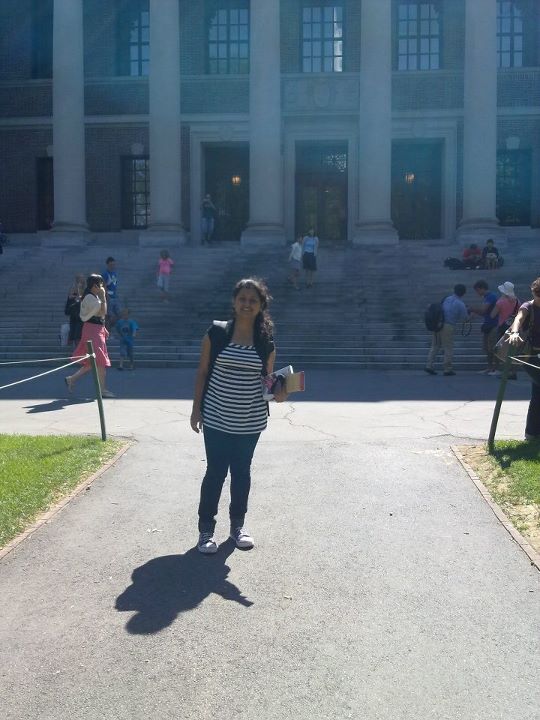


Anant Jain
Final year Genetic Engineering
SRM University.

Research Scholar at CRTD, Germany

One of our senior student Mrs.Deepa, Research Scholar of Genomics Lab, as part of her Ph.D work, undergoing training on cell culture and animal handling at Center for Regenerative Therapies Dresden - CRTD, Germany.


Deepa at work


Handling mice


Animal House

Semester Abroad Program(SAP) - Genetic Engineering, SRM University


I am really feeling very fortunate to write this column about my SAP experience. I am doing my undergraduation final year project in Brigham Women Hospital which is basically affiliated to Harvard Medical School, Boston. I have spent last 20 days of my life running in the corridors of the labs of Harvard Medical School, those labs which are considered to be the best in the world, those which have produced hundreds of noble laureates and I will be here for 5 months till the beginning of February.


To begin with my SAP experience, I must say it is very early for me to write about it but what I learn and experience in this short time is not that less. Here, my project will be on the study of tumor induced angiogenesis in Zebra fish embryo. Initially I am undergoing training to handle fish and learning methods to breed and grow them in laboratory condition. I am sure none of us has the experience of handling transgenic animals...but trust me it is very exciting to try something we have never done before. This program is not like other SAP programs where you are made to attend classes in a different university. It is totally lab experience where you will have the chance to work with some dedicated, knowledgeable people who love science and make you also fall in love with science. It is really enjoyable to work in such a friendly atmosphere.

I must express my sincere gratitude to the Department of Genetic Engineering for their support and help and also SRM University for making this program available for us. I also would like to thank all the people of International Relations Office, SRM University for their guidance. Last but most importantly I would like to thank my parents, my whole family and friends for their love and care.

- Swagata,
  SAP student at Harvard Medical School,
  Final Year B.Tech Genetic Engineering

Credit Seminar On Synthetic Genome And The Construction Of A Synthetic Bacterial Cell

ABSTRACT

The synthetic genome technology developed enable biologists to build microbes capable of solving human needs in medicine, bio energy and industry. In 2010, a team of synthetic biologists from the J.Craig Venter Institute (JCVI) announced the creation of a bacterial cell that had a chemically synthesized genome. To build the synthetic Mycoplasma mycoides two sets of methods were developed. First method involves the development of 1.1 Mbp of M.mycoides genome by the process called genome assembly and the second method is the Genome Transplantation. Currently these methods are being applied to cyanobacteria with the aim of making genome modifications that would enable photosynthetic production of bio fuels and high value chemicals. These methods are also being used in the rapid production of more effective vaccines against influenza virus. There has been an ethical discussion concerning synthetic life from the earliest stages of this work. As synthetic genomic applications expand, it leads to rise of philosophical issues that have broad societal and ethical implications.

Student: M.V.Rambhupal Reddy
Venue:   B404 Class room
Date: 19/09/2011
Time: 9:30am

Crack this!

Any guess about this animal? Leave your answers in comments section.

Congratulations to the students placed in TCS!!

Congratulations and All the best students.

Aditi Chaturvedi
Kritika Saraf
Md. Ahmar Ahmad
Menon Anjaly Anand
Rahul Yadav
N.Sruthija
Zeenat Khan

We Brewed Wine!!!!!!!!

Once in a lifetime experience is what I can define Wine Making as!

This experience gave us the opportunity to find out first hand how wine is brewed and furthermore we actually got to do it ourselves. I still remember the excitement when we were assigned wine making as a mini-project. And everything else just fell into place. We immediately formed a group and started working on it. We wanted to think out of the box. technically, we wanted to brew a non-grape wine. We came up with Pear finally. We bought the fruits, made juice and followed the protocol.It gave us an opportunity to learn a lot about wine making. It was a very different experience trying to brew wine. It was not easy at all. We faced so many difficulties and shortcomings throughout the process of making wine but inspite of everything, we didnt give up. We continued working hard on it. And in the end........... It was WINE!!!!!!!!!

This amazing experience ended with a cava tasting. It was truly a memorable time making wine. :)

Find about WINE here..


Me and my friends - Aishwarya, Abhirami, Apoorva, myself and Abhishek Gupta.

-Abhishek Sampath
IIIrd B.Tech Genetic Engineering